Phase 1
THE PROBLEM
Stale imagery sells the product, not the transformation.
Trinity's visuals were functional but flat. The same panel-on-roof shot rotated everywhere, with no emotional connection to what solar actually enables. People don't buy panels. They buy the life underneath them.
Phase 2
THE RESEARCH
We didn't guess. We studied.
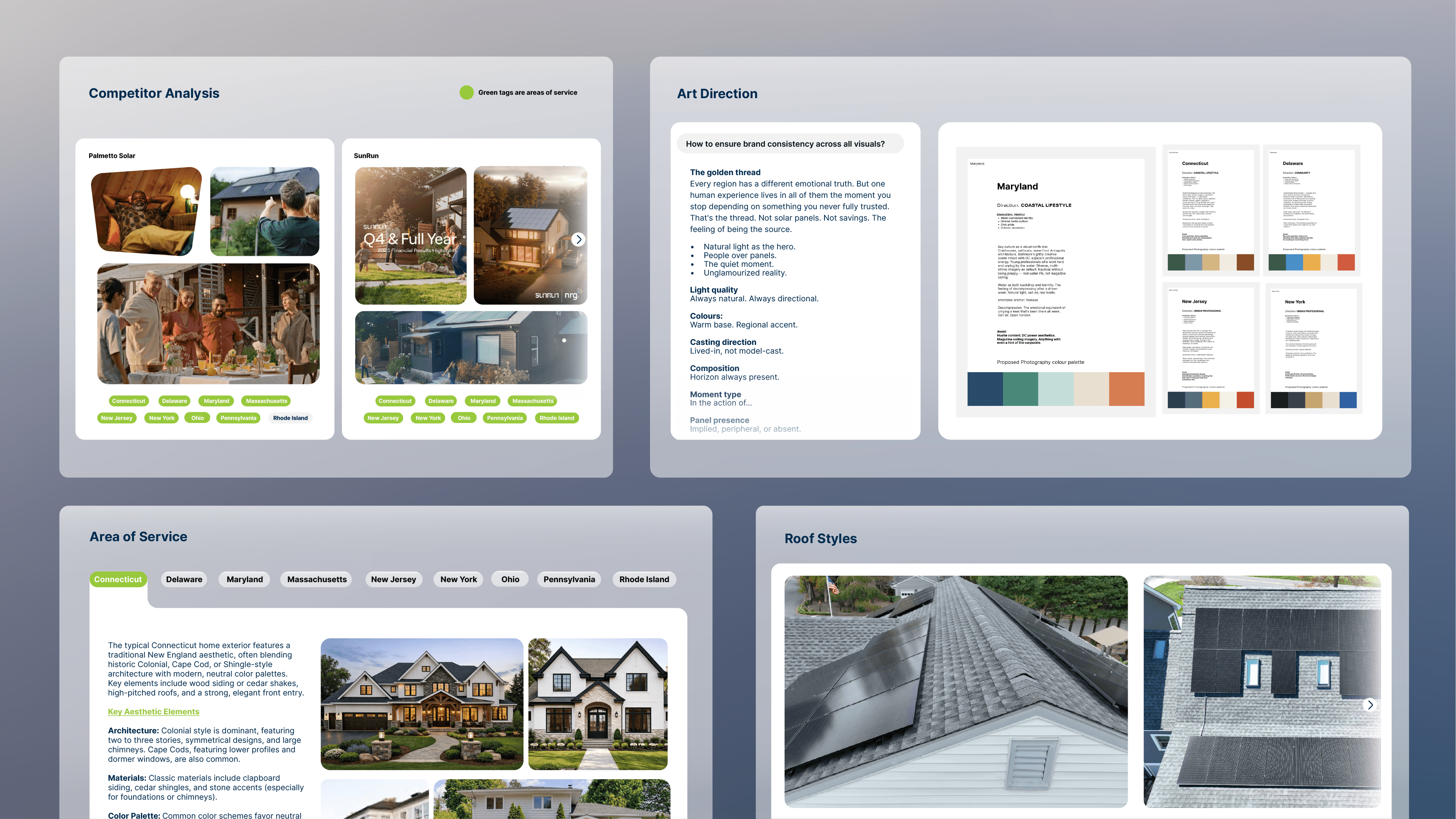
60+ competitor assets across 12 states, and a pattern everywhere we looked: cold color grading, monocultural casting, product-heavy framing. Nobody was selling the lifestyle. That gap became our north star.
Phase 3
THE STRATEGIC SHIFT
Life in the foreground. Solar in the background.
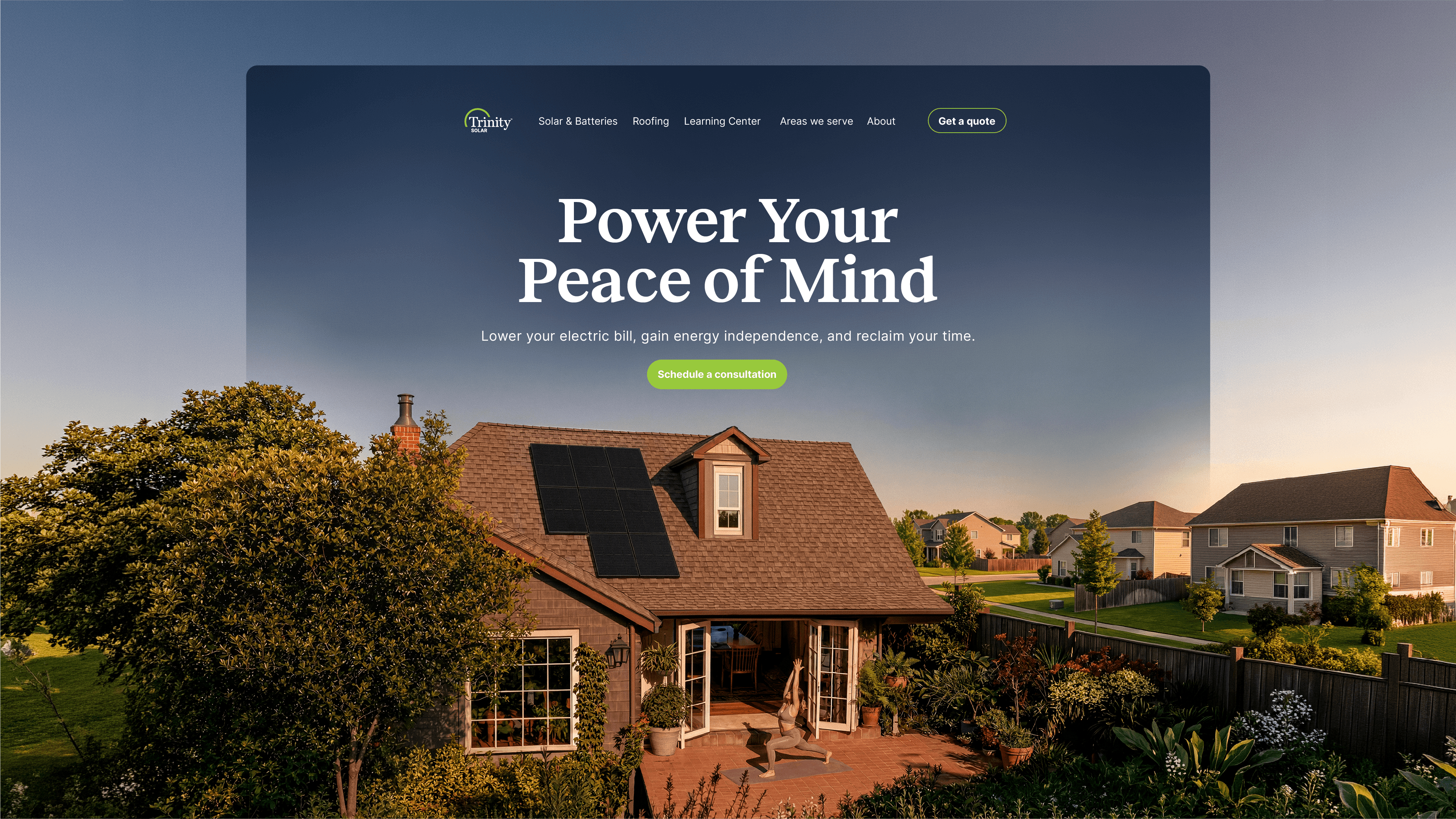
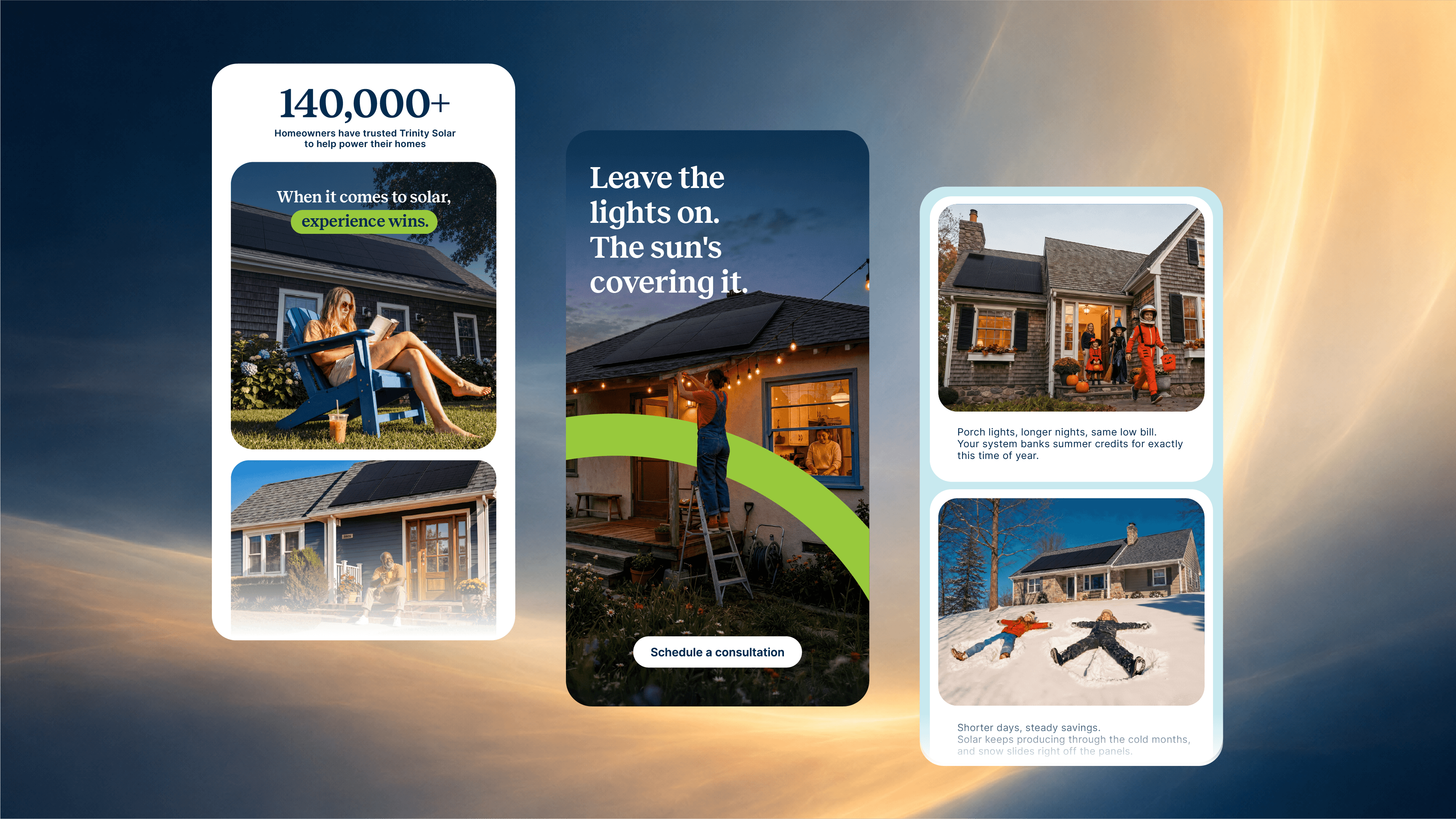
We stopped asking what solar looks like and started asking what solar makes possible. Life became the hero. The product became the quiet enabler powering the story.
Phase 4
HUMAN DIRECTION
Generation made options. Direction made them usable.
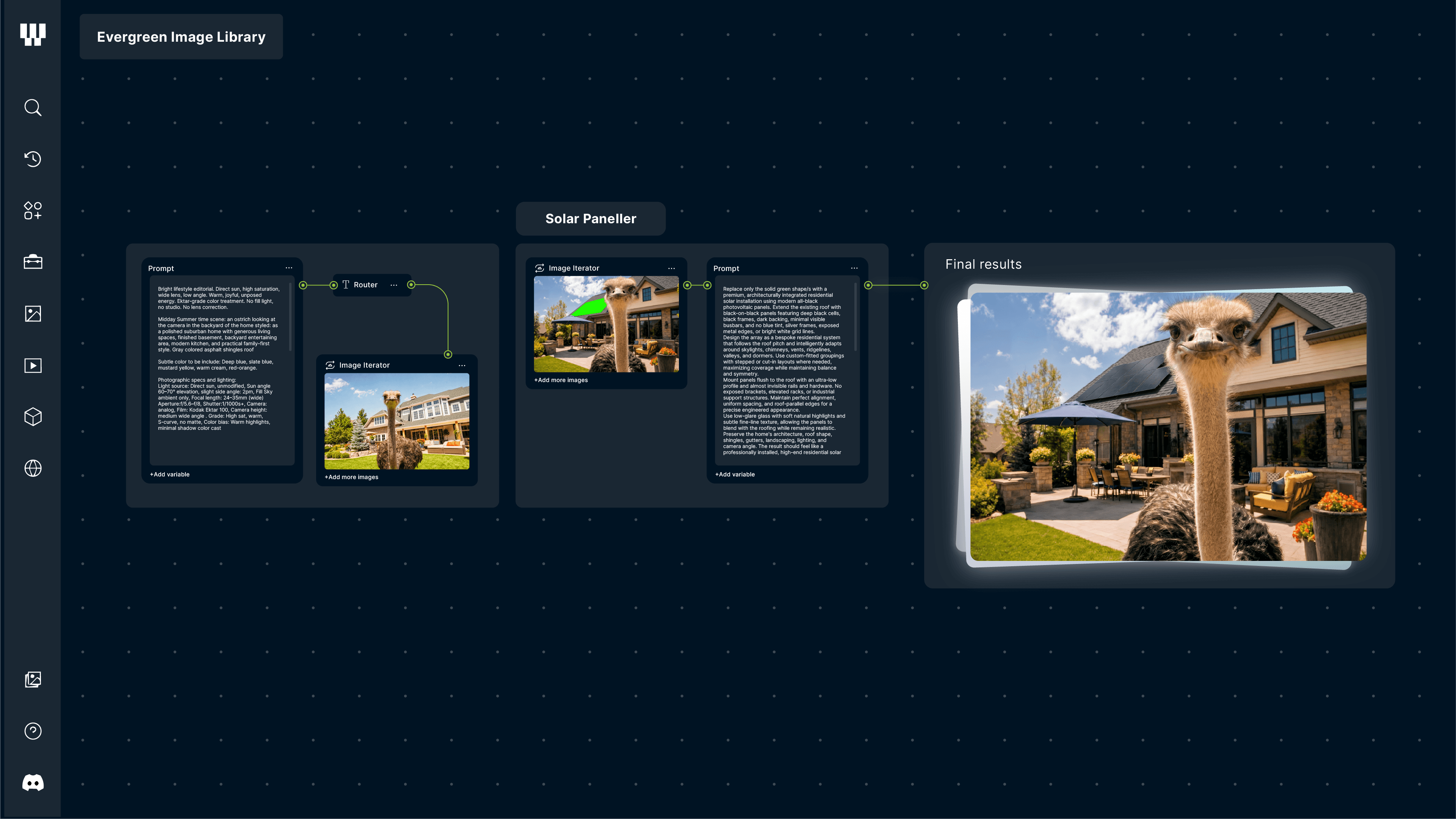
The panel treatment runs as its own step, separate from the scene, so the array builds correctly regardless of what's happening in the frame. Every selected image then went through human review for anatomy, architectural plausibility, solar accuracy, casting, seasonality, lighting, and brand fit before final retouching.
Phase 5
THE LIBRARY
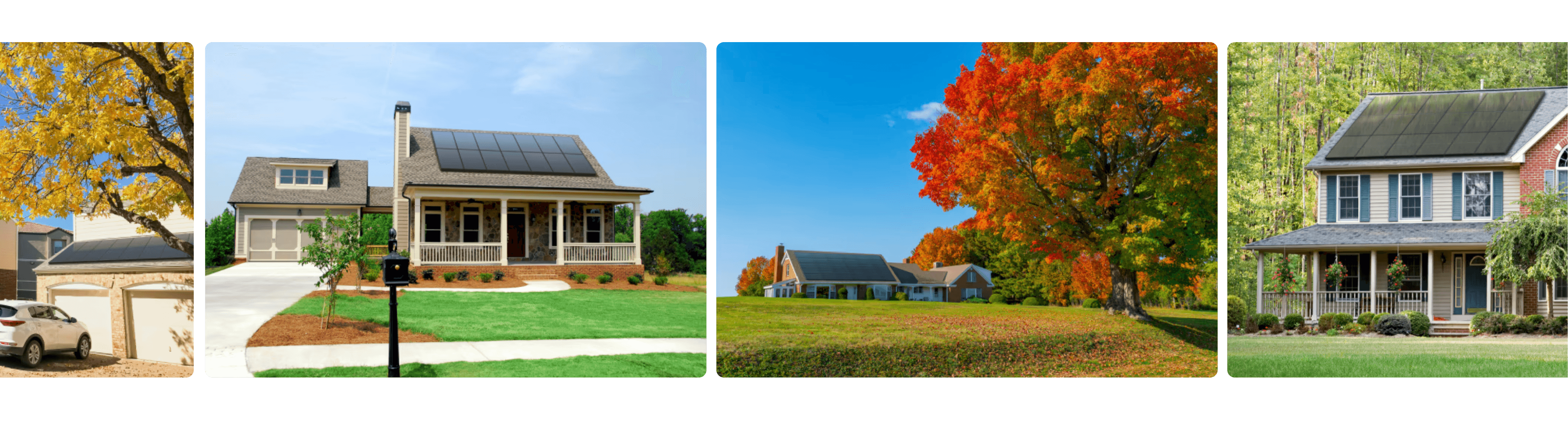
84 hero images. Eight territories. Zero photoshoots.
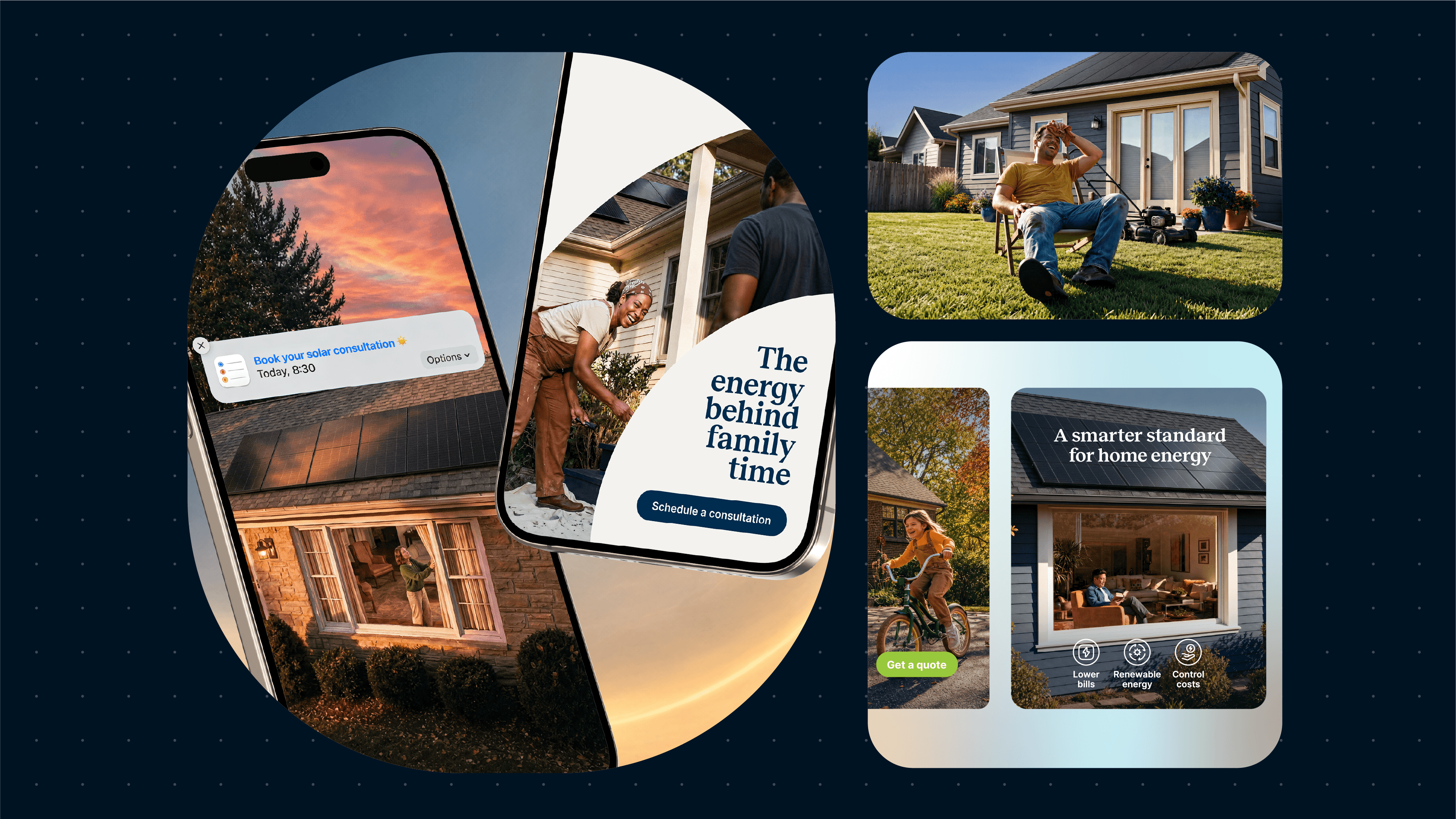
Backyard moments, quiet mornings, evening wind-downs, kids as heroes, seasonal life, pets at home, pride of ownership, moments with the team. Warm light, real families, lived-in homes, solar present but never the point. Deep enough to rotate across every channel for a year without repeating itself.

Phase 6
REAL-WORLD DEPLOYMENT
Built to ship, not to sit in a folder.
Website hero, social feed, paid ads, email. Every asset delivered in three aspect ratios, sized and ready for immediate rotation with no additional production cost.

Credits
Creative Direction & Strategy - Pooyan Alizadeh
AI Image Generation - Craig Wright
Presentation Design - Florencia Gutman
Graphic Design - Nadia Xu
Motion Graphics - Arash Sharifkian