The Challenge
Demand was outpacing the system.
Templates were inconsistent or missing. Designers reverse-engineered the brand on every asset. QA was reactive. Two or three major campaigns ran alongside monthly promotions across print, digital, email, social, and video. The volume was real. The infrastructure wasn't.
The Solution
Not a redesign. A rebuild.
The first move wasn't aesthetic; it was structural: a repeatable workflow from brief to delivery, with every handoff clear and every role understood. Loom-based async direction replaced ambiguous back-and-forth. Weekly standups kept six designers moving as one.
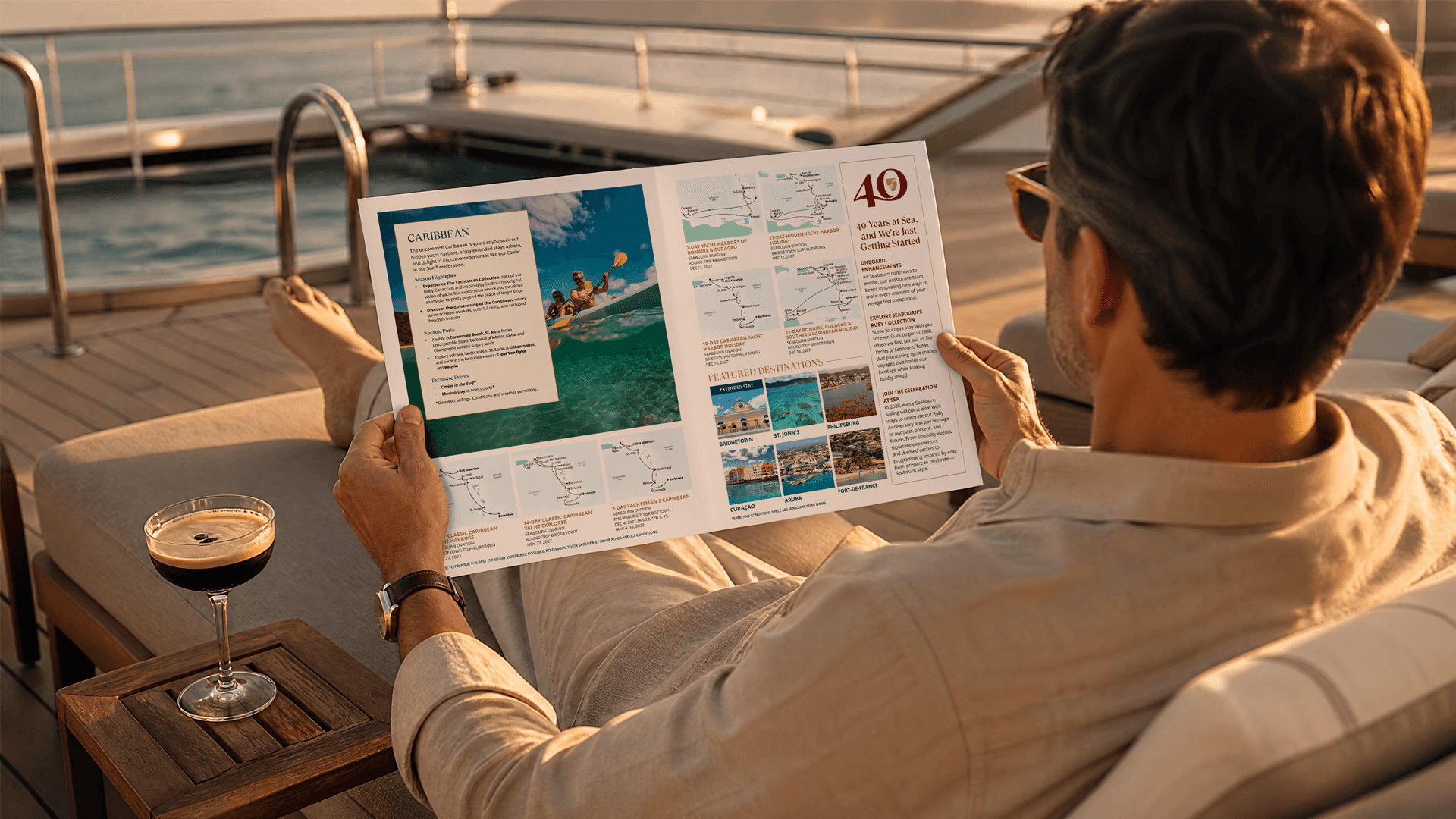
The Foundation
Template Ecosystem
Architecture before aesthetics. More than 50 production-ready templates covering every recurring asset: advisor flyers, emails, brochures, decks, and signage. Locked brand elements, editable zones, export settings baked in. Not style guides. Tools. Designers spent less time deciding and more time shipping.
The Team
Structure
A system is only as strong as the people running it. Two designers became six; 20+ creatives trained over 2 years. Every hire followed the same two-week ramp: documentation, tool training, paired work, QA review, then independence. People stayed because the environment was clear.
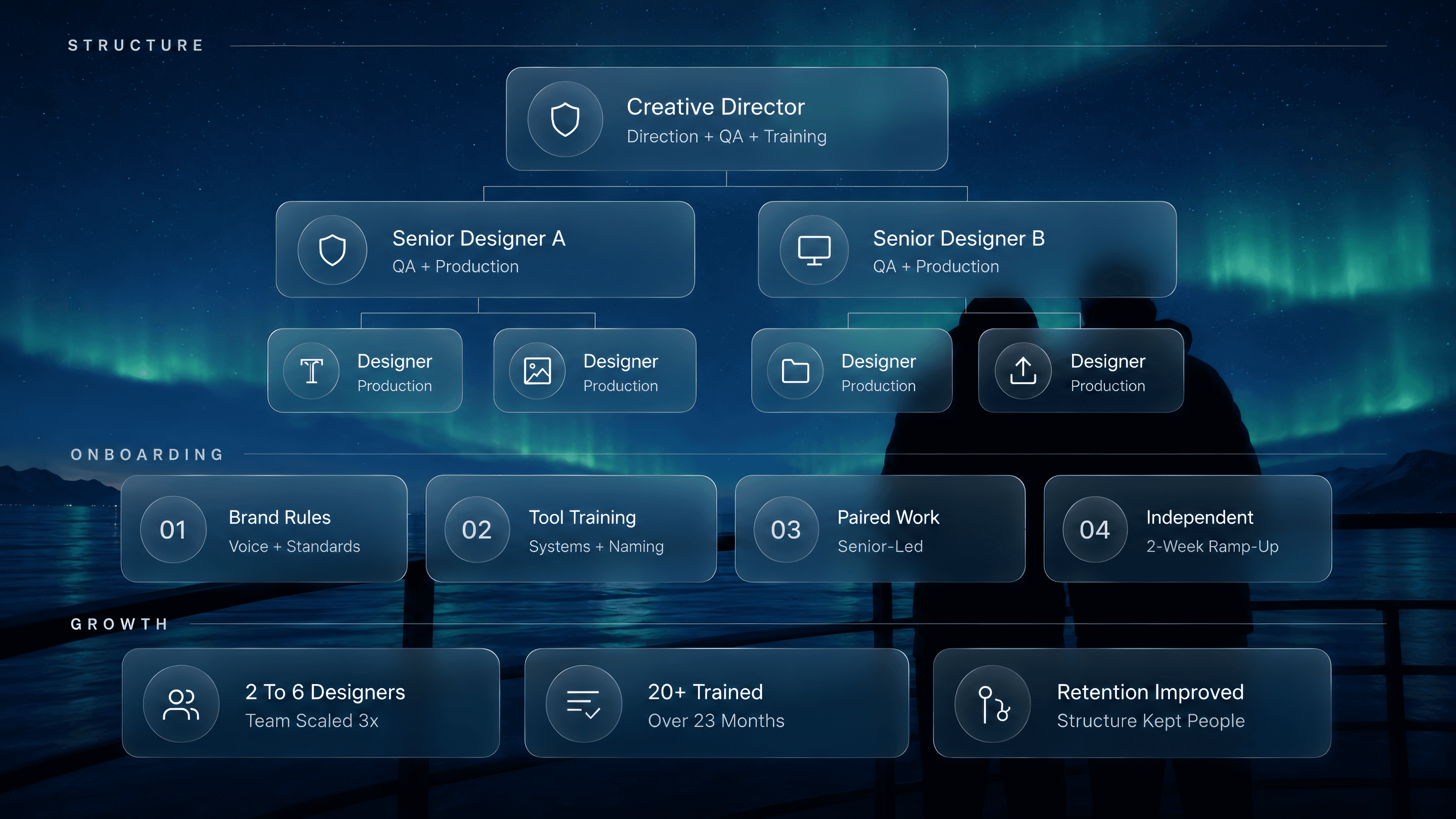
The Team
Onboarding
Every new designer, same starting point. A structured onboarding board so any new creative could ramp up in two weeks without slowing the account down.
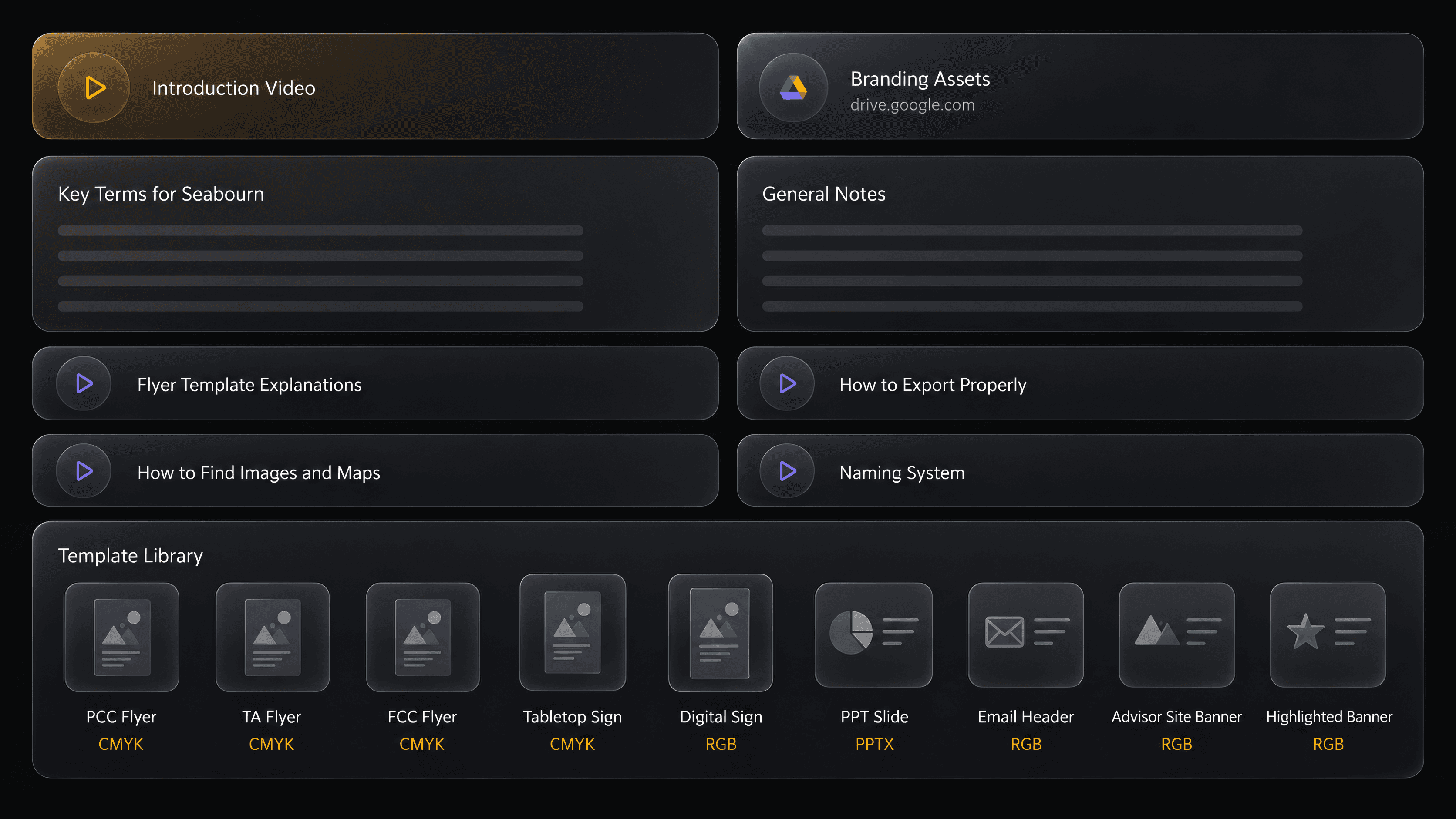
The System
Briefing
No asset touches a designer without a brief. Every client request was translated into a structured brief before it hit the queue. Ambiguity was the enemy of speed.
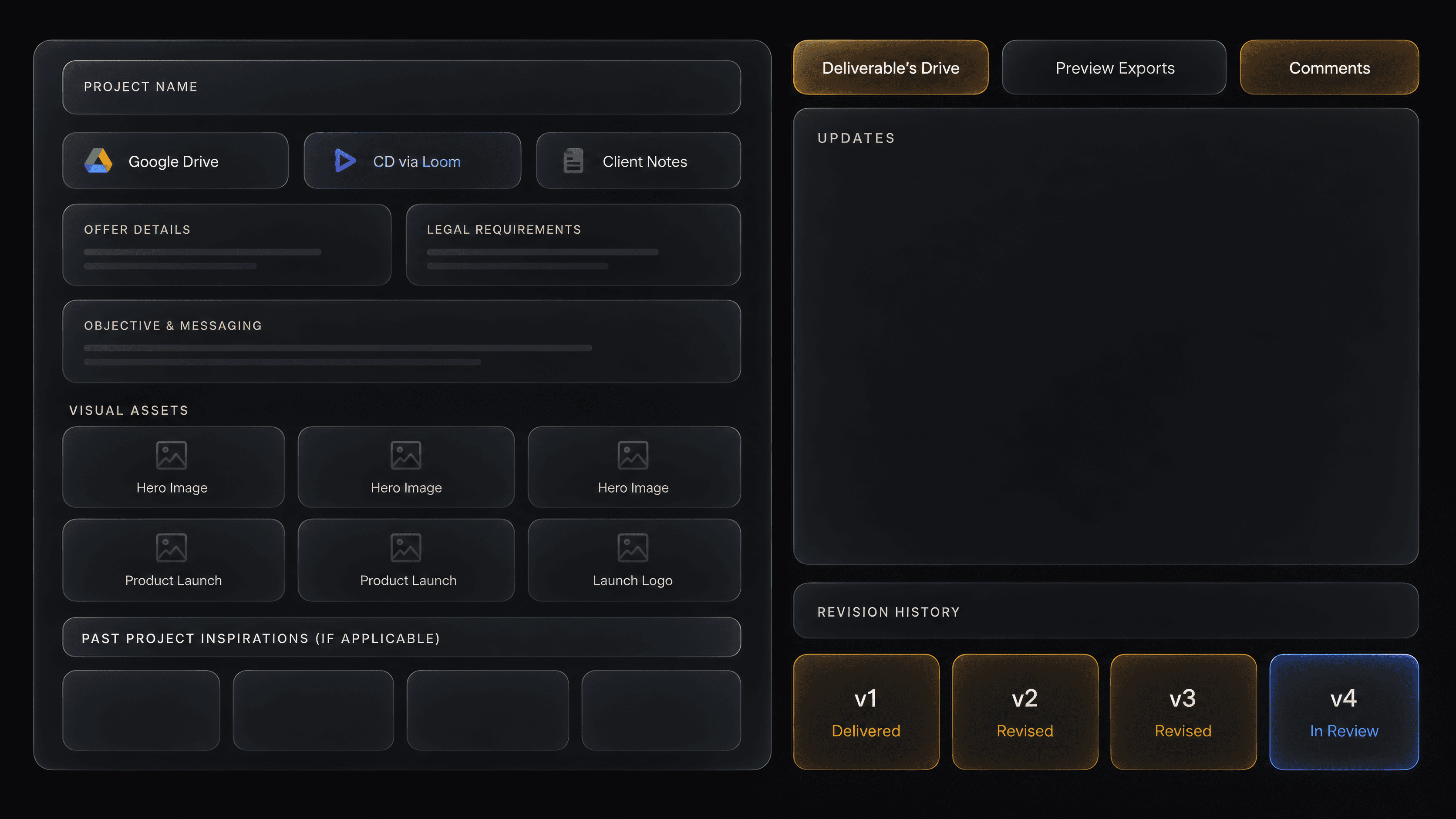
The System
Quality Assurance
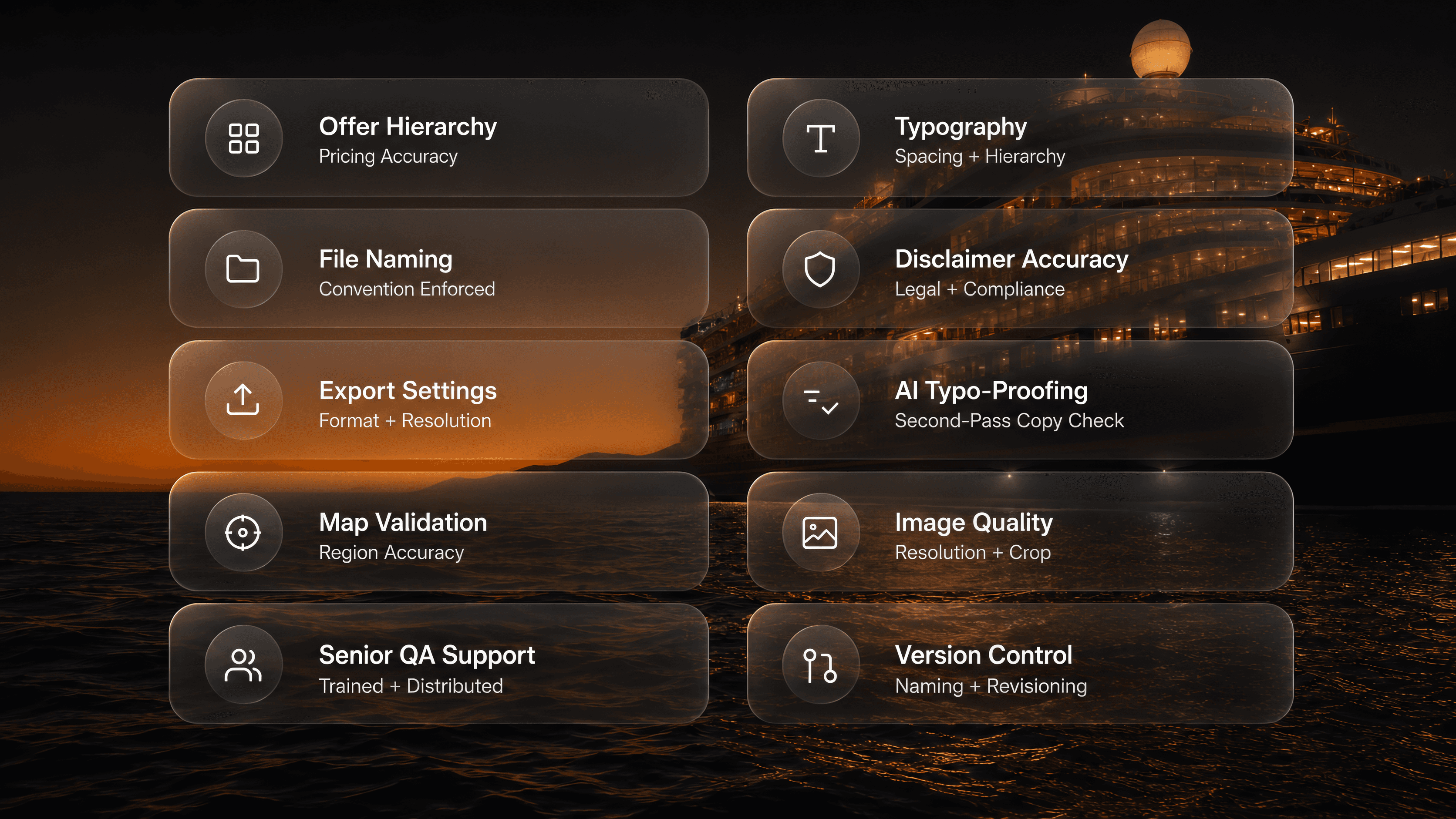
Precision is the product. At this brand tier, an incorrect disclaimer is a client-relationship problem. QA became a system, not a final check: offer hierarchy, legal language, map validation, typography, file naming, and AI-assisted typo-proofing as a second pass. Nothing left the building on luck.
The System
Workflow Innovation
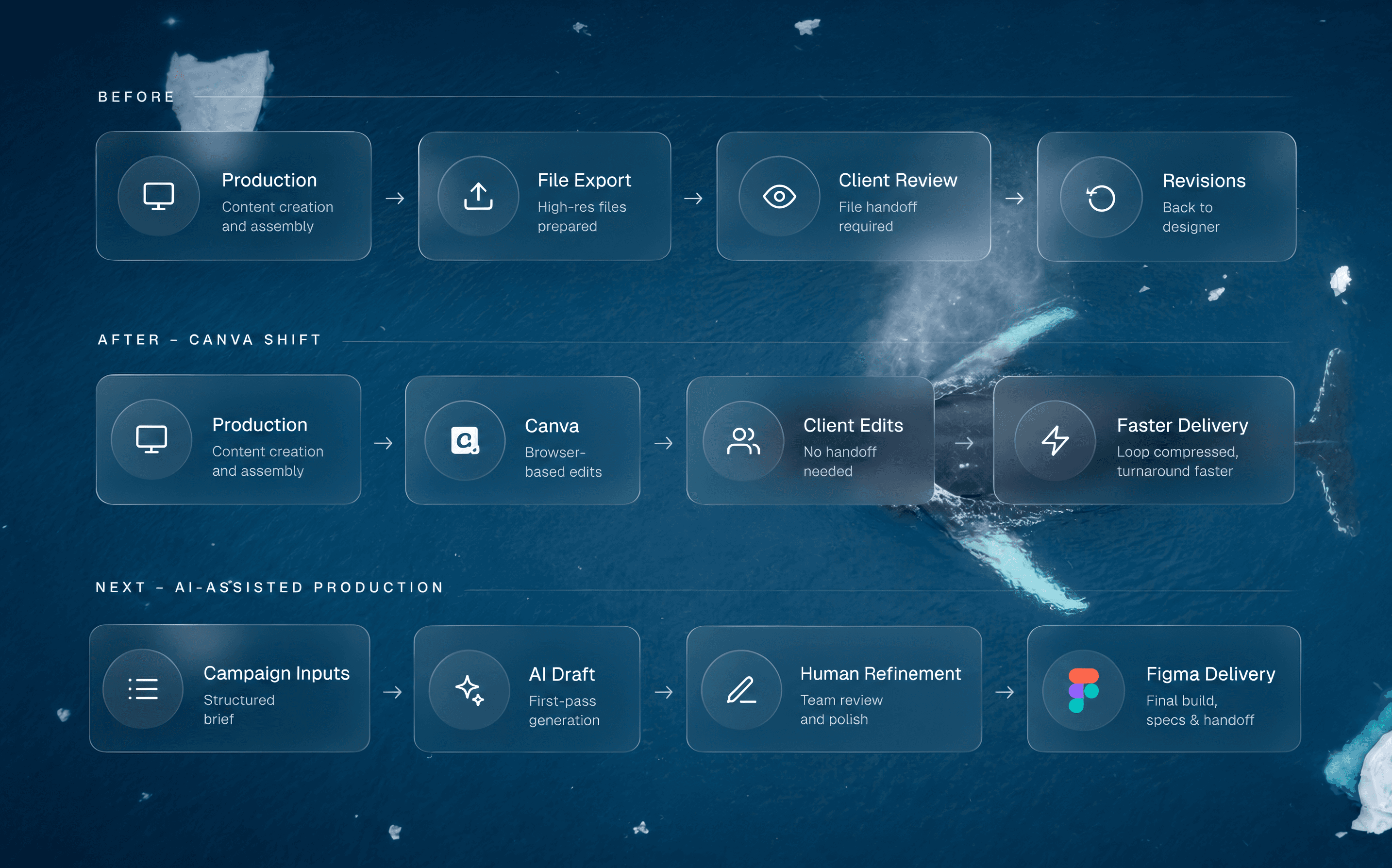
Friction down. Delivery up. Partway through the engagement, I intentionally shifted portions of production into Canva and then Figma. Not as a cost-saving measure. As a friction-reduction move. The workflow became smarter about where complexity was actually needed.
The Result
Impact
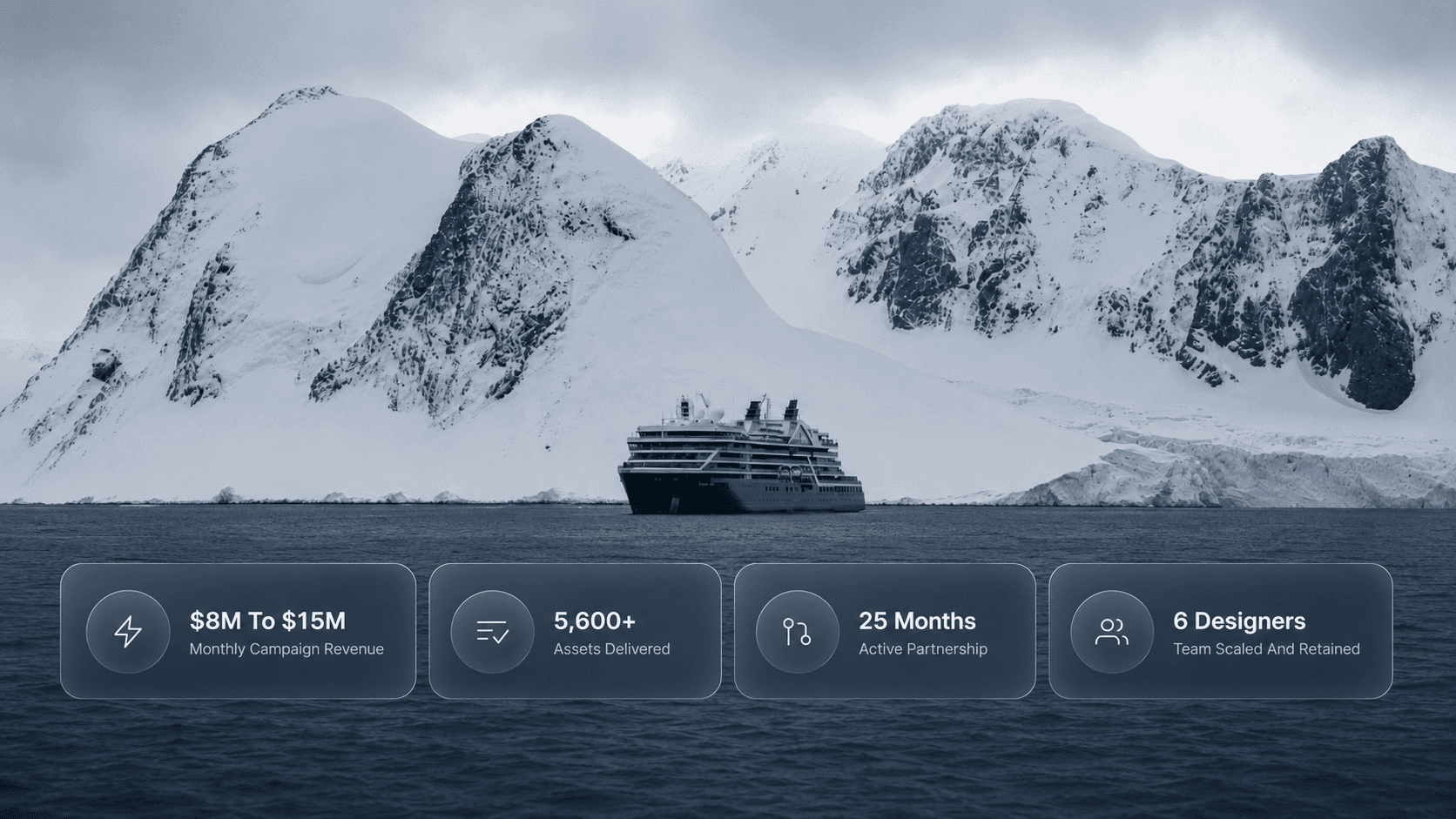
Trust turned into growth. The client expanded the relationship: more teams, broader scope, guaranteed budget. That trust isn't earned by assets. It's earned when execution stops being their worry.
Credits
Creative Systems Lead Pooyan Alizadeh
Senior Designers Arash Sharifkian, Laura Faccone
Designers Karan Vora, Deyan Cavalcante, Larissa Damasceno, Nicolle Ginter